
You are using an out of date browser. It may not display this or other websites correctly.
You should upgrade or use an alternative browser.
You should upgrade or use an alternative browser.
Guitars made of something other than wood...
- Thread starter Mark Wein
- Start date

tgk03
Ain't it crazy?
Oooh. I like the look of the antique brass. It looks super cool/old.
Thanks. When I was shopping, I was unsure what finish I wanted. This option had just come out and I knew immediately that was it.

ellengtrgrl
Guitar Old Timer
And congrats Ellen. Nice tricone.
Here's mine. Antique brass finish on a steel body:

And my project, a faux resonator, 50s or 60s metal-bodied electric. I hope to restore someday:

Ooohhh! Both look VERY NICE!!
 I played a National Tricone (my favorite local guitar shop [Cream City Music] is a National dealer). It sounded great, but at $2500 was way more than I could afford. I prefer tricones, to biscuit bridge resos - they don't have that (what I find to be) overly poppy/percussive sound note-wise. I don't mind spider bridge resos, but I have to be in the mood for them, since I find them at times a bit too honky/overly midrangey sounding.
Last edited:
tgk03
Ain't it crazy?
I agree with on the sound of biscuit bridges. I like the versatility of the tricone and went for it because it was intended to be the only National I'll ever buy. But, now I am gassing for a wood-bodied buiscuit and the Resolectric. And a spider bridge for that bluegrass sound.
I never tried a Republic. I'd love to hear yours.
I never tried a Republic. I'd love to hear yours.

instantsteve
Glowing Cloud
Yeah, Rick Derringer used to play one. I think the guy who made these was Joel Cawthorn.
Thanks! I will try to find that.
ellengtrgrl
Guitar Old Timer
I agree with on the sound of biscuit bridges. I like the versatility of the tricone and went for it because it was intended to be the only National I'll ever buy. But, now I am gassing for a wood-bodied buiscuit and the Resolectric. And a spider bridge for that bluegrass sound.
I never tried a Republic. I'd love to hear yours.
I'll make some sound clips over the next few days. I wonder where I should post them, here in the main guitar forum, or the acoustic subforum?
Last edited:

Here is a link to the stone guitar patent
http://www.google.cz/patents?id=h24...urce=gbs_overview_r&cad=0#v=onepage&q&f=false
http://www.google.cz/patents?id=h24...urce=gbs_overview_r&cad=0#v=onepage&q&f=false

telecaster911
Kick Henry Jackassowski

tgk03
Ain't it crazy?
I'd love to hear a comparison of the various models, as I never really followed these guitars and have no idea what a spider bridge, biscuit. tricone, or whatever mean in terms of sound (or even construction).
A resonator guitar produces sound by the string vibrations being transferred through the bridge to a resonator cone. There are three types of bridges to achieve this.
A biscuit bridge is a round maple disc mounted in the center of the cone. It is usually used on metal or brass bodied instruments and probably the loudest of all the resonators. Like Ellen said, it can poppy, brash. Johnny Winter likes 'em-- says they "sound like a trash can."

A spider bridge is where the bridge is mounted in the center of an aluminum web that has 8 spokes that make contact with the cone at the rim. You usually see these on wood bodied instruments and they have a nasally sweet tone. Almost always used for bluegrass and country music.

A tricone like mine and Ellen's guitar, uses three cones which uses a t-shaped bar whose endpoints make contact with the cones in their centers. These are not as loud as the single cones but they sustain forever and have a very complex, rich tone. These have always been metal but recently people have begin making wood bodied tricones.

Try this link, if you want to read more:
http://www.jessedeanefreeman.com/nationalinfo.html
Last edited:


ellengtrgrl
Guitar Old Timer
Regarding Resos - scale length is typically ala a Martin, and they come in 14 or 12 fret bodies (in other words 12 frets clear of the body, or 14 frets clear of the body). They're kind of rare nowadays (but were much more common in the 20s & 30s), but there are reso mandolins, reso tenor guitars, and reso ukes.
In order of evolution for resonator guitars you have tricones, spider bridges, and biscuit bridges (called because whre the bridge contacts the cone is round like a biscuit), and with the biscuit bridge being the last to be developed. It's funny how the spider bridge reso came about. The resonator guitar was developed by John Dopyera, who formed the National Stringed Instrument Corporation, with several investors providing the money. John Dopyera wanted to develope a single coned followup to the tricone, but the other investors nixed the idea. So, he left National, formed the Dobro Manufacturing Company (getting his brothers to join him in the new company - Dobro is a contaction of Dopyera Brothers), and developed the spider bridge resonator, which was not only cheaper to make, but louder than the tricone to boot. National developed the biscuit bridge as in response to the spider bridge dobro.
In order of evolution for resonator guitars you have tricones, spider bridges, and biscuit bridges (called because whre the bridge contacts the cone is round like a biscuit), and with the biscuit bridge being the last to be developed. It's funny how the spider bridge reso came about. The resonator guitar was developed by John Dopyera, who formed the National Stringed Instrument Corporation, with several investors providing the money. John Dopyera wanted to develope a single coned followup to the tricone, but the other investors nixed the idea. So, he left National, formed the Dobro Manufacturing Company (getting his brothers to join him in the new company - Dobro is a contaction of Dopyera Brothers), and developed the spider bridge resonator, which was not only cheaper to make, but louder than the tricone to boot. National developed the biscuit bridge as in response to the spider bridge dobro.
Last edited:

rusholmeruffian
a good kind of terrible
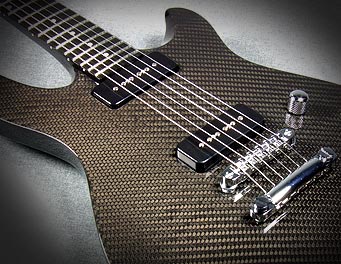
Status Slipstream (graphite monocoque):
ellengtrgrl
Guitar Old Timer
Oh cool! A Leggo Paul!
I wonder if it's really a functioning guitar.
J
jamoco
Guest
I have heard that, too. Rick supposedly had one. Jerry Garcia and Roy Buchanan did receive guitars made of stone made by Joel Cawthorn who made guitars, as far back as the 60's, out of different materials including, Marble, Granite, Onyx, Plexiglass and Mahogany. These are extremely rare with little documentation. I had heard that the stone guitar was originally designed for John Lennon, but have not been able to verify this. There is some dialog about this on the Tele Forum. I seem to remember a reference in GP, too.

I have heard that, too. Rick supposedly had one. Jerry Garcia and Roy Buchanan did receive guitars made of stone made by Joel Cawthorn who made guitars, as far back as the 60's, out of different materials including, Marble, Granite, Onyx, Plexiglass and Mahogany. These are extremely rare with little documentation. I had heard that the stone guitar was originally designed for John Lennon, but have not been able to verify this. There is some dialog about this on the Tele Forum. I seem to remember a reference in GP, too.

Welcome to the forum!